News and research
News and explainers
Background and updates on ERE payments for home charging.

Every month
ERE monthly report October 2026
ERE price, electricity price and what changed at providers, computed automatically and sourced.
Filter by topic

ERE price drops sharply: from €0.47 to €0.30 per ERE in two months
The ERE price fell from €0.4725 (week 35) to €0.3025 per ERE (week 44): about €0.10 gross per kWh charged. What that means for your earnings.

Can your ERE provider book? What the NEa overview of 21 October shows
Of the 36 ERE providers open for sign-up, 16 book through an account with the NEa registration-service facility. 20 do not yet (21 October 2026).

ERE providers change their terms as the ERE price falls: what changed in early October
Joulo, LaadCash, Lekkerladen, Zeres and other providers changed their terms or prices in early October. On 6 October 2026 the ERE price was €0.462. What changed per provider, with sources.

Joulo improves its terms: what customers get now
On 7 October 2026 every cost of retrieving charging-session data at Joulo falls under the service fee, including a fee from a manufacturer or operator. Cancellation is also possible in year one, ending at the latest one month later.
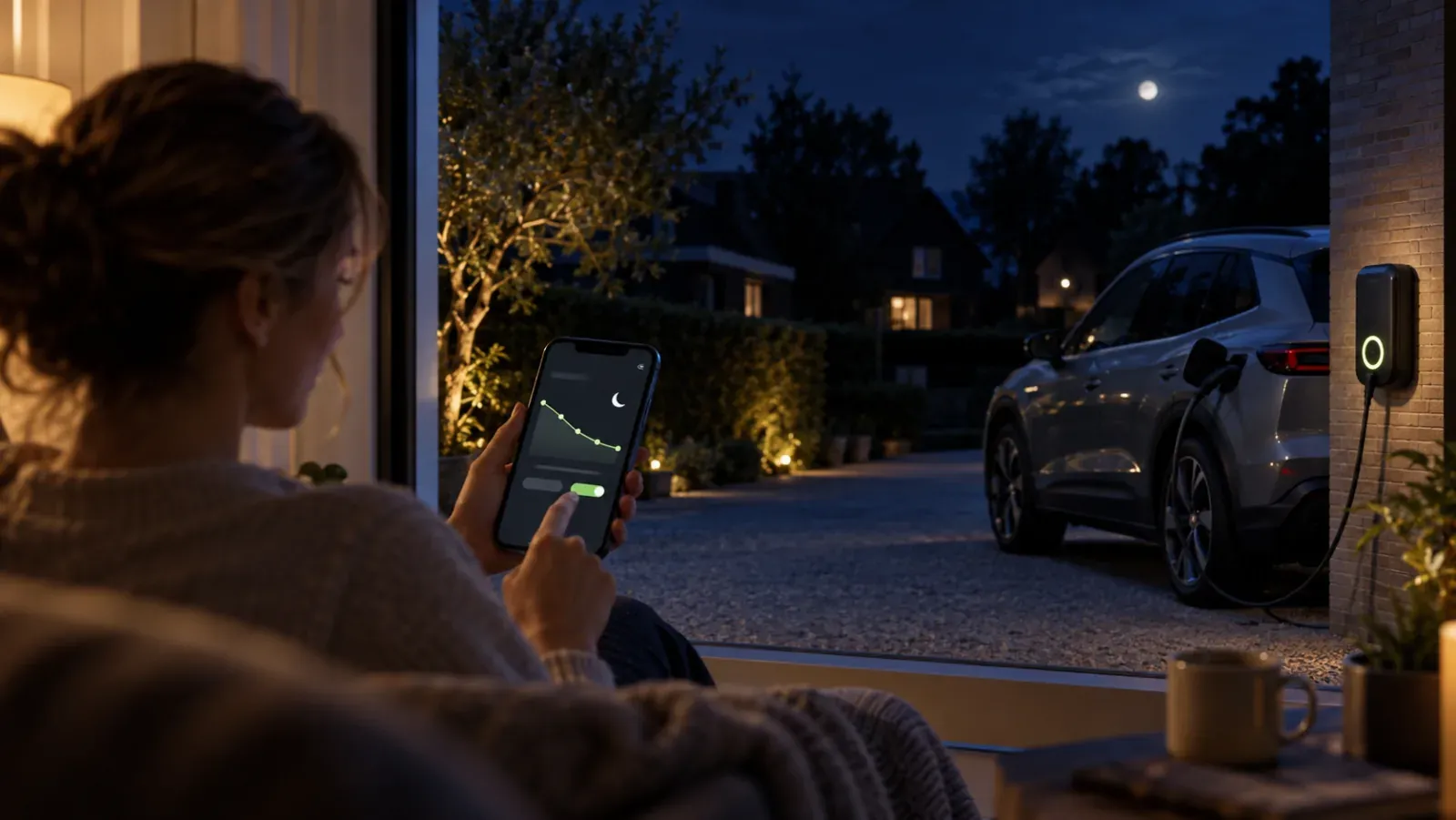
Energy suppliers now pay you to charge at home. What do you keep?
Tibber, Frank Energie, Zonneplan and Vattenfall now pass on part of the ERE value of home charging. What they deduct, when they pay and where the catch lies.

Leaving money on the table? Cash in your 2026 charging this year
Free money? Not quite: you are paid for your charging data via the ERE market. But if you charge at home, you can still claim 2026 retroactively. Here’s how.

Research: 12 of 26 ERE providers have fees in the small print
At 12 of 26 ERE providers, costs that appear only in the terms are taken off your payout. That is the finding of our research, with 18 checks per provider.

Heads up: from 2027, external MID meters stop counting for businesses too
Since January 2026 private individuals need the MID meter inside the charge point. Only businesses with an external one from before 2026 have until 2027.

What to look at when comparing ERE providers
The lowest commission isn’t everything. Also look at payout, contract term, transparency about corrections and whether your charging data is accepted.
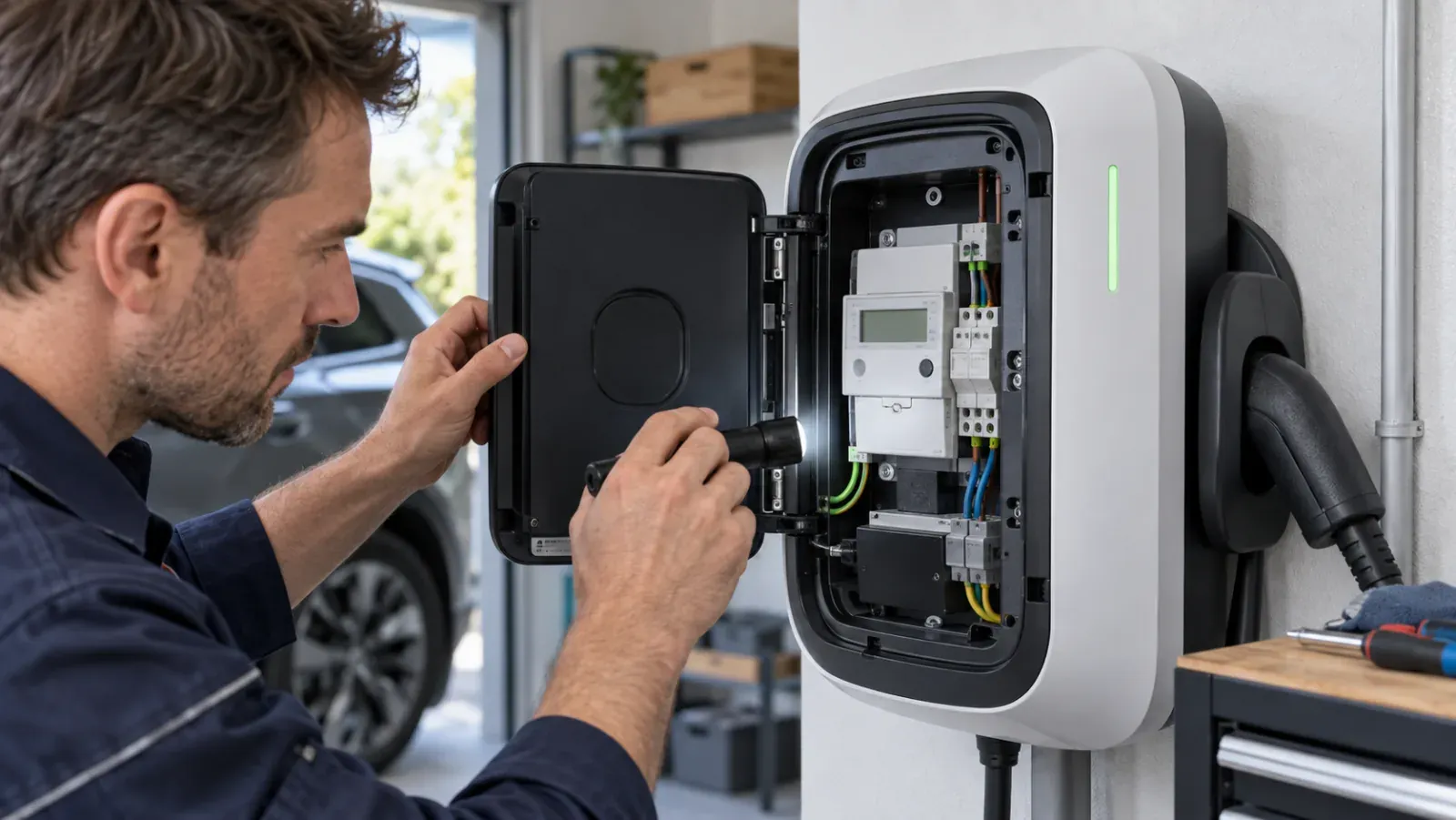
When is a smart charge point suitable for ERE registration?
Not every smart charge point qualifies for ERE. For private individuals an integrated MID meter is decisive, plus kWh export and your own grid connection.
Why is a news section useful for ERE?
The ERE scheme is relatively new, and the rules, the price and the participating providers are still changing. Through the news we keep you informed of developments that can affect your earnings.
What changes in 2027 with the MID meter?
Nothing for private individuals: they have needed a MID meter integrated in the charge point since January 2026, with no transition year. On 1 January 2027 the transition year ends for businesses that were already booking with an external MID meter before 2026; from then on, such a meter no longer counts for them either.
Where do you get the news from?
We rely on public sources, such as the NEa, regulations and public market information. We separate facts from our own projections and interpretation.
Can the ERE price change in the future?
Yes, the price moves with supply and demand and can rise or fall. Our scenarios are indicative and meant as direction, not a prediction or advice.
How do tighter CO2 targets affect demand?
Rising reduction obligations for fuel suppliers can increase demand for EREs. Whether and how much that affects the price is uncertain, and we keep an eye on it.
How do I stay up to date?
You can sign up for the newsletter with double opt-in, or follow the news on the site. You can unsubscribe at any time via the link at the bottom of every newsletter.